SAN: Buckyballs Workshop / PACEE Lab
Table of Contents
1 Introduction
The Self Aware Network (SAN) is an experiment about the future of architecture. It is comprised of a system for building intelligent structures that interact and communicate with the environment.
Once structures are able to understand their environment (AI), the next step is to become robotic. Eventually structures are alive. They constantly reconfigure to adapt to the needs of the people.
This document is a proposal and thereby subject to change.
2 Summary of workshop
What we do:
- We will assemble a Self Aware Network from nodes and edges.
- We will test different constructions and discuss them.
- We will produce sound by changing the structure and interfacing with it.
- We will discuss the future of architecture, buildings that posses intelligence and that can adapt to the needs of the people.
What we will learn:
- creative construction
- geodesic structures
- modular sound synthesis
- geometry in nature and architecture
- the buckyball
- spatial thinking: real structure vs. structure on screen
- thinking outside the box: What sound does a structure make vs. how does it look?
- impact of architecture on society
- how creativity is used to find solutions to the world’s problems
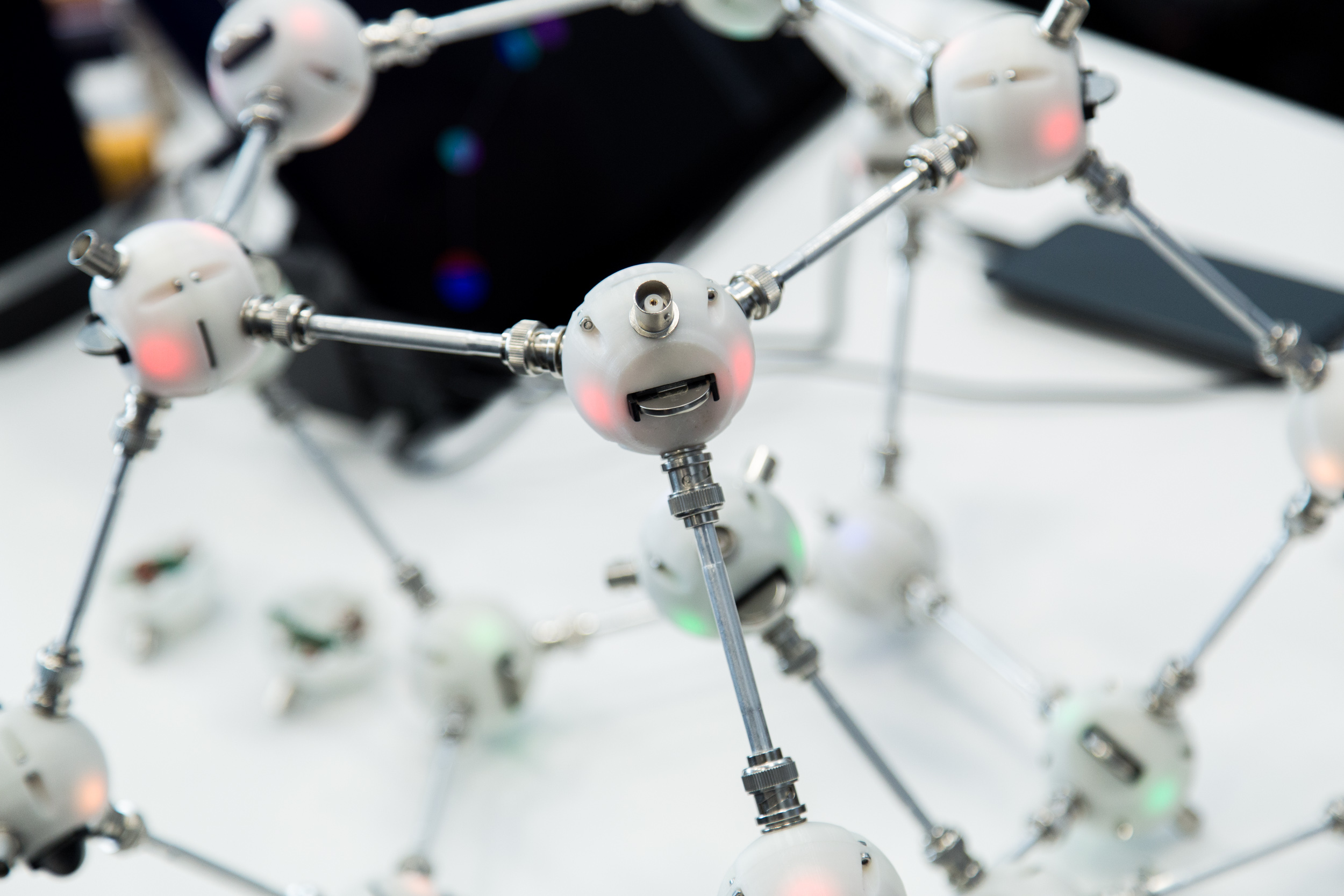
Figure 1: SAN at Maker Faire Berlin 2019 (photo © 2019 Tobi Giessen)
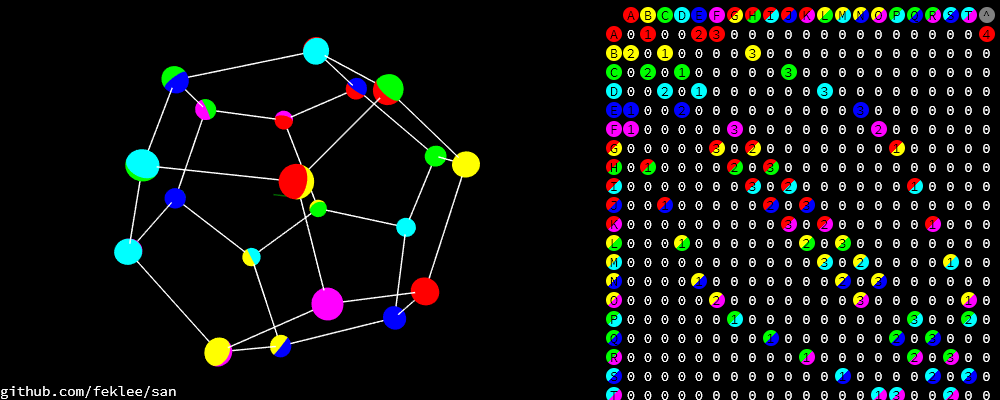
Figure 2: Digital representation of a SAN structure (dodecahedron)

Figure 3: App to interface with a sound module
3 Desktop system
Specs:
- Node diameter: 50 mm
- Edge length: 100 mm
- Power source: 2 × CR2032 coin cells per node
- Types of connectors: BNC
- Node material: PLA
- Edge material: aluminum
- Microcontroller: 1 ATMega328p 16Mhz per node (Arduino compatible)
- Computer interface: web app written in JavaScript / Node.js / WebGl / Web Audio / genetic algorithm
- Low level communication protocol: MultiTrans
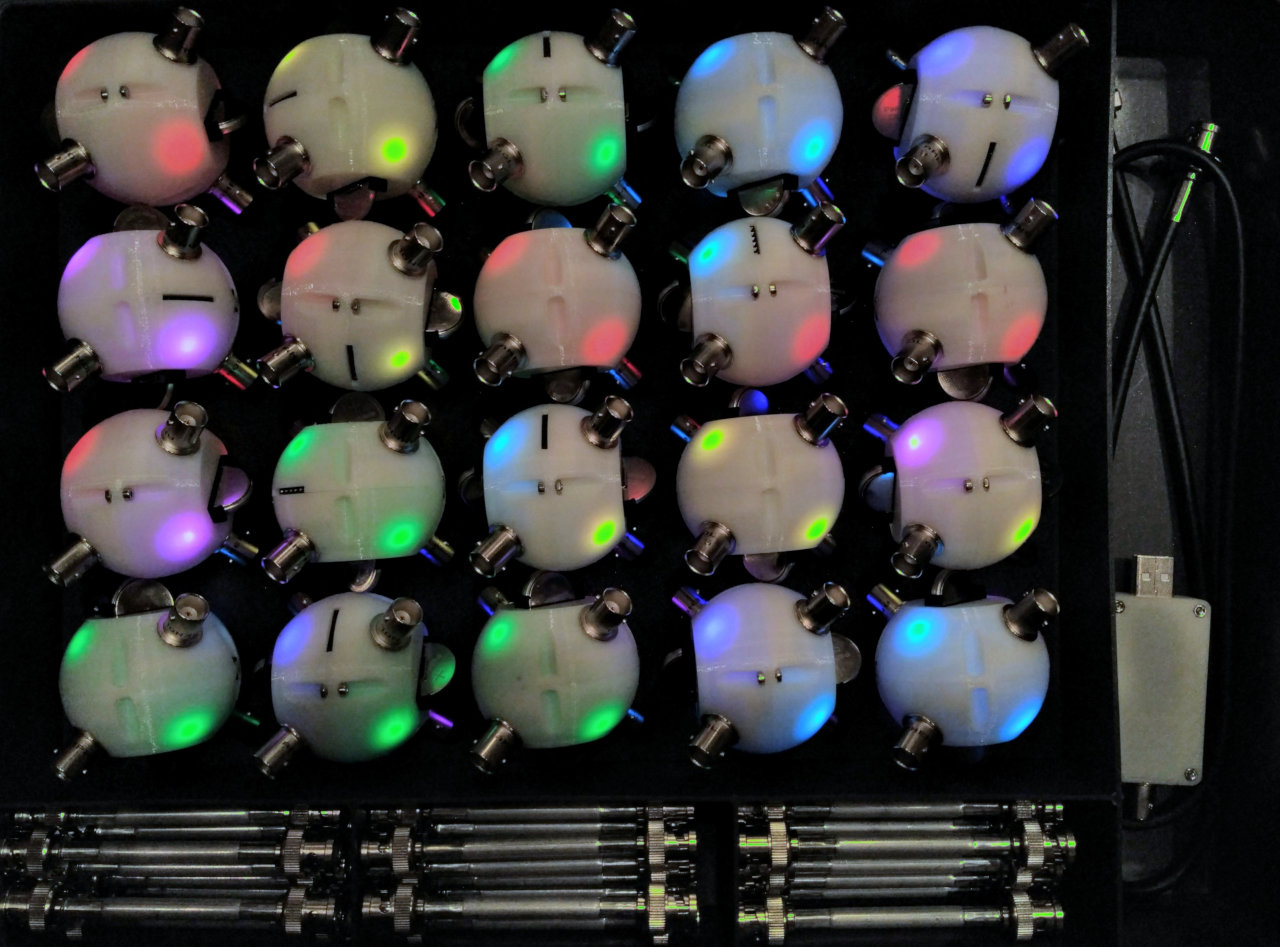
Figure 4: Complete set
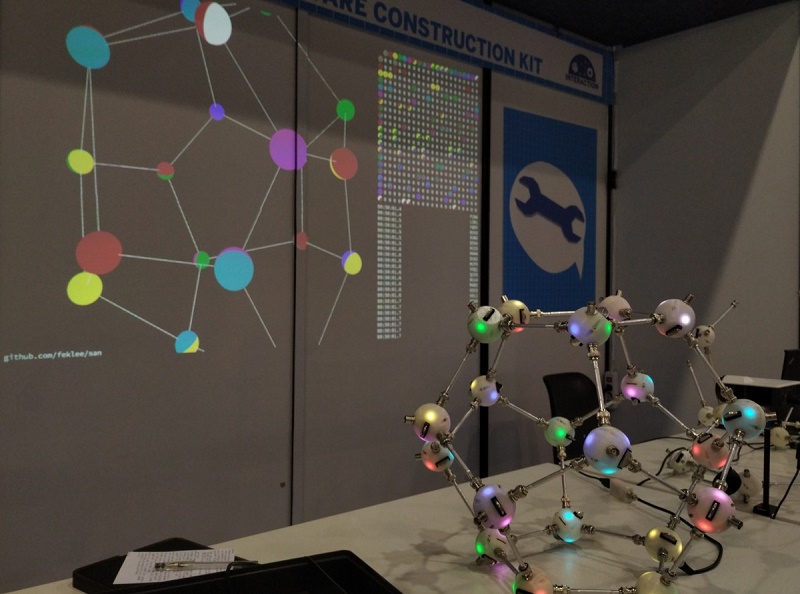
Figure 5: Dodecahedron built by children at the end of Maker Faire Rome. Notice the visualization in the background: The structure understands how it is assembled.
4 Life-size system (under development)
Specs:
- Node diameter: 100 mm
- Edge length: 400 mm
- Types of connectors: quick-connect
- Power source: 4 × AAA battery per node
Other specs match those of the desktop system.
The life-size system is under development. Three material combinations are being evaluated:
- Plastics (3D printed nodes connected with PE pipes): can be made water tight, child safe, very precise
- Wood (coconut shells connected with bamboo pipes): sustainable, natural, tasty (coconuts), child safe
- Metal (laser cut nodes connected with stainless steel pipes): robust, permanent, clean aesthetics, very precise
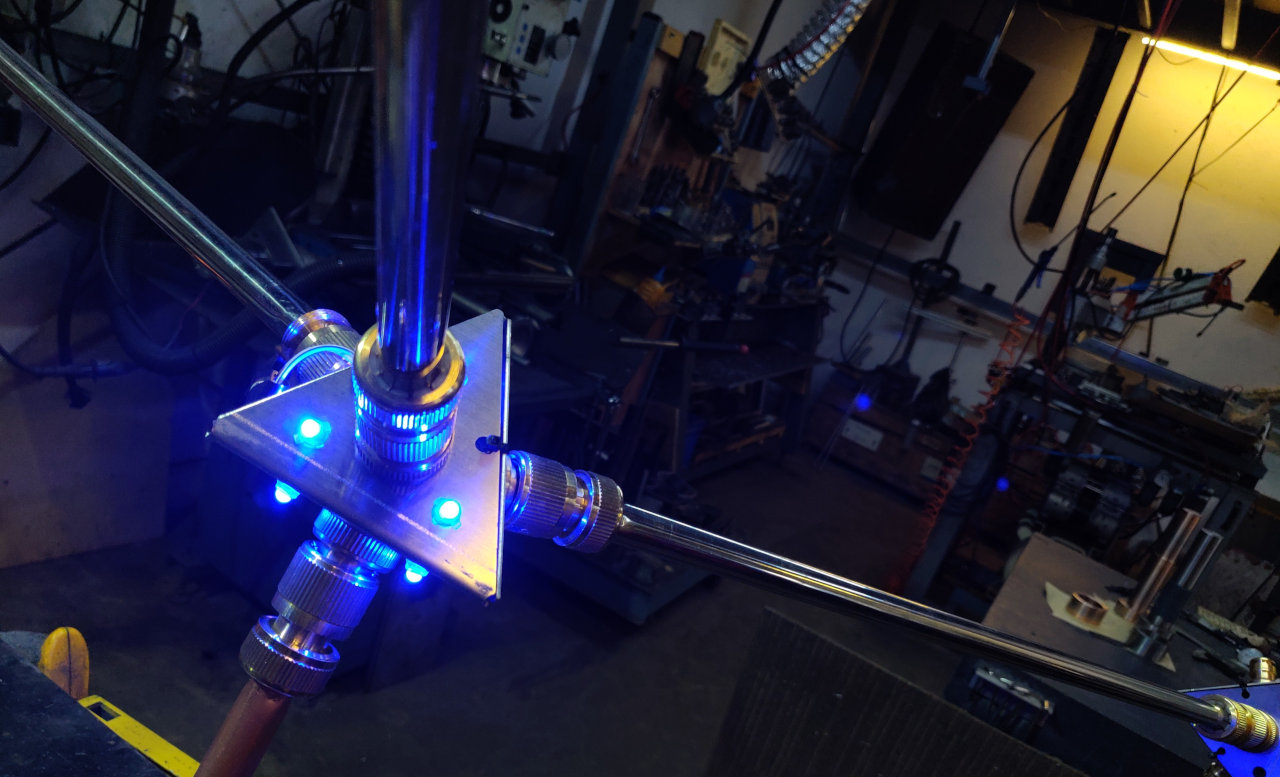
Figure 6: Prototype made out of metal (half a meter arm length)
5 Past events
- Maker Faire Berlin 2018
- Maker Faire Rome 2018, with talk about genetic algorithms
- Maker to Market Bootcamp Bilbao 2018 (one out of six selected projects from EU countries), plus Maker Faire Bilbao
- Sónar Hong Kong 2019: workshop about an architectural structure that makes sound, targeted at professional musicians and architects
SteamHead workshop for students, April 2019
Video and narration © 2019 James Simpson of SteamHead Shenzhen
- Maker Faire Berlin 2019, workshop and exhibition with prototypes of life-size version
6 Equipment and tools
- Computer connected to a projector and to speakers.
- In case we build nodes for a life-size system:
- Coconuts & bamboo version: hand tools such as drills and saws are required
- Plastics version: screw drivers
7 Tutor
Felix is the inventor of the Self Aware Network (SAN). His academic background is architecture and physics (Universities of Hannover and Konstanz, Germany, 1997–2004). Felix investigates collaborative construction systems that bridge the real and the virtual: Asides from SAN, he created the Reality Builder. With a partner, Felix runs the Berlin based art production company Rieger & Klee GbR. At art-science gallery Spektrum he organizes MetaMatter, “a laboratory of research and practice focused on the transformations of matter.”
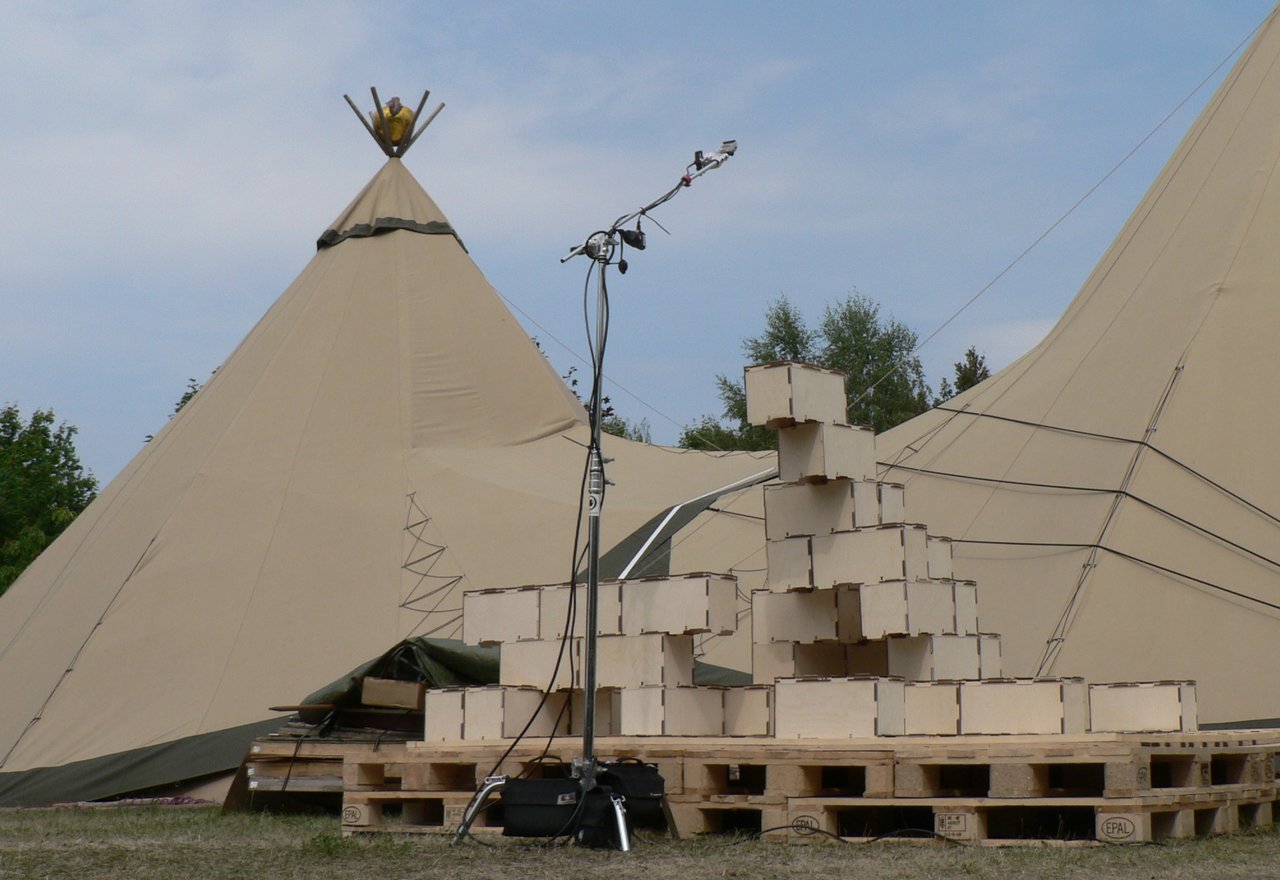
Figure 7: Reality Builder at CCC ’15: collaborative remote construction
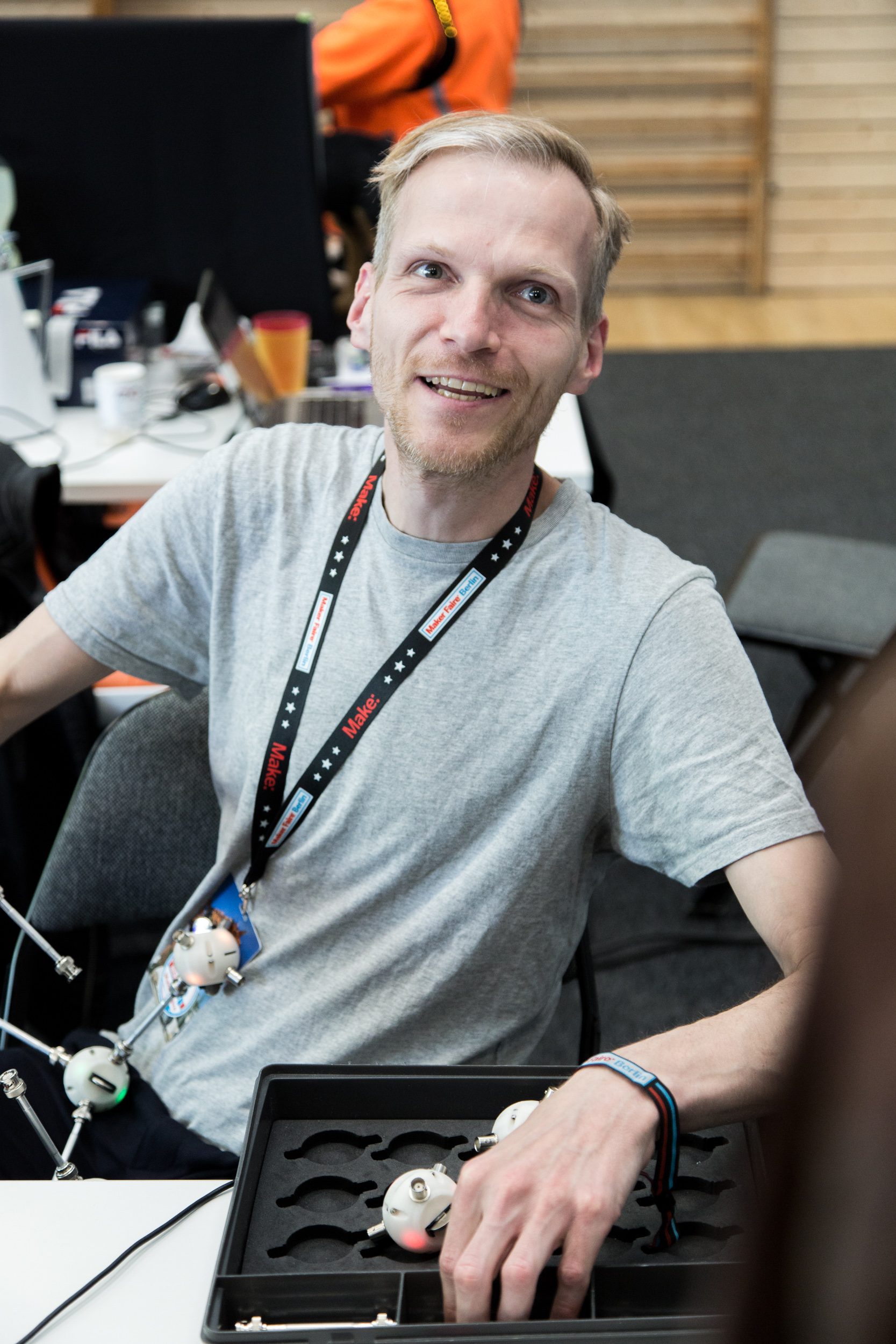
Figure 8: Felix E. Klee at Maker Faire Berlin 2019 (photo © 2019 Tobi Giessen)